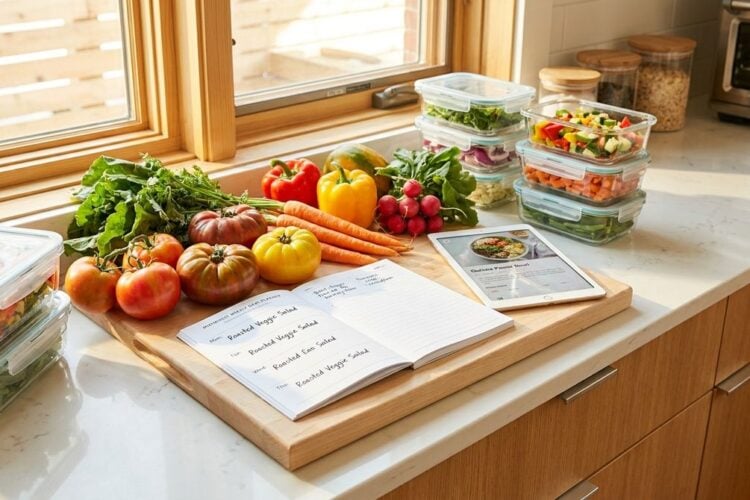
Roasted vegetables often taste even more concentrated the next day, but simply reheating the same tray can make dinner feel repetitive. A better approach is to treat them as a prepared component. Their browned edges, soft centers, and existing seasoning can become the foundation of soup, pasta, eggs, spreads, or grain dishes with relatively little extra work.
Store the first meal correctly
Future usefulness begins when the vegetables leave the oven. Serve what you need, then cool and refrigerate the remainder promptly according to current food-safety guidance. Use a clean, shallow container and label it with the date. Do not leave the tray on the table throughout a long meal with the intention of saving whatever remains.
Keep sauces and crisp garnishes separate when possible. A dry roasted vegetable is easier to redirect than one already saturated with dressing. If the vegetables were served with meat or another high-risk food, avoid cross-contamination and store only portions that were handled safely.
Match the texture to a new format
Soft vegetables work well when blended into soup, mashed into a spread, or folded into eggs. Firmer pieces can be chopped for grain bowls, pasta, or a filled flatbread. Very browned pieces contribute strong flavor in small amounts but may taste bitter if they dominate a purée.
Try one of these transformations:
- Blend vegetables with suitable stock for a quick soup.
- Chop and fold them into a frittata or scrambled eggs.
- Toss them with pasta, greens, and a bright dressing.
- Mash them with beans for a sandwich filling or dip.
- Layer them over grains with herbs and a crisp topping.
If the original batch contains several vegetables, separate them only when doing so is easy. The mixture may already have useful complexity. Readers may also want to visit canisiuscampus.net.
Create contrast instead of adding more softness
Reheated roasted vegetables can become limp, so add something fresh or crisp. Raw cabbage, cucumber, toasted seeds, breadcrumbs, herbs, pickles, or a green salad can restore contrast. Acidity is often valuable because roasting emphasizes sweetness and richness. Add lemon, vinegar, yogurt, or a tomato-based element in a measured way.
Reheat only the portion you intend to eat and use a method appropriate to the food. A hot pan or oven may refresh browned edges; a microwave is convenient but often softens texture. You can also visit eastavenuebooks.com for more reading. If vegetables were stored too long or show signs of spoilage, do not try to rescue them through reheating.
Taste before adding salt. The original seasoning may have concentrated during roasting, and cheese, stock, olives, or condiments can add more. A little cooking water or unsalted liquid may be more useful if the mixture seems dry.
Plan leftovers before roasting
When preparing a large tray intentionally, keep the seasoning broad enough to support several meals. Oil, salt, pepper, and a few compatible herbs leave more options than a highly specific sweet or spicy glaze. You can apply a bolder sauce to the first serving and reserve some plain pieces for later.
For a related read on this site, see How to Keep Cut Fruit Appealing for Packed. For example, roasted cauliflower might move into soup, while peppers and courgettes might suit pasta. The list should reduce decisions, not prescribe exact recipes.
Label containers with the likely next use if that helps: “for Thursday soup” is harder to forget than “mixed vegetables.” Check the refrigerator before starting a new dinner and build around the oldest suitable prepared component.
Leftovers become appealing when they gain a new texture, format, and supporting flavor. Safe storage protects the ingredient, but deliberate contrast gives it a second identity. With that mindset, an extra tray of vegetables is not unfinished business; it is part of tomorrow’s preparation.
When the container is empty, evaluate the quantity you roasted. If leftovers were eagerly used, the larger batch saved genuine effort. If they repeatedly waited until the edge of their safe storage window, roast less next time or freeze a suitable component earlier. Also note which vegetables retained their texture and which were best puréed. This information turns “cook extra” from vague advice into a household-specific practice. Planned leftovers should create an easier meal with minimal compromise, not a recurring obligation to rescue food nobody wants.
Keep the second meal visually distinct as well. A different bowl, cut size, or arrangement can signal that the vegetables have a new purpose. Presentation cannot replace flavor, but it can keep an intentional transformation from looking like a hurried replay of yesterday’s plate.