Fresh produce is one of the most enjoyable parts of cooking, yet it can also be one of the most frustrating to manage. Herbs turn limp in a drawer, lettuce becomes watery, and carrots soften before they are used. Good storage can change this picture entirely. This article explains simple methods for keeping herbs and vegetables fresh for longer, using ordinary kitchen equipment and a little planning.
Why storage changes everything
Fresh vegetables and herbs continue to respire after they are harvested, which means they slowly use up their own stored energy. Warmth, air exposure, and moisture loss all speed this process. Some produce loses water quickly and becomes soft, while other items rot when they stay damp for too long. The right method depends on the type of plant. A cool, humid spot suits leafy greens, a dry and cool place suits root vegetables, and herbs often prefer something between those two conditions. Understanding these differences prevents the common mistake of storing everything in the same drawer. Many people discover that a small change in placement or wrapping makes a large difference to how long food stays usable.
Herbs that prefer water
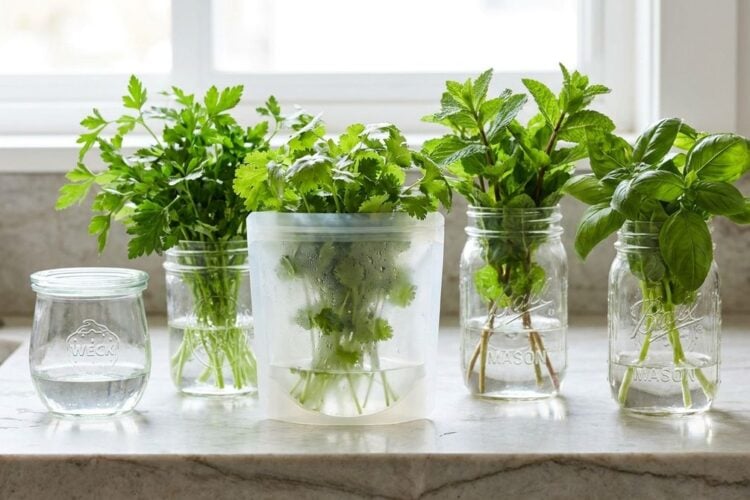
Soft herbs such as parsley, coriander, mint, and basil often last longer when they are treated like cut flowers. Trim the stems slightly, stand them in a small glass of water, and cover loosely with a plastic bag. Keep them in the fridge, and change the water every few days. Basil is more sensitive to cold, so it is usually better kept at room temperature, away from direct sunlight. Mint and parsley tolerate the fridge well when they are stored this way. Woody herbs such as rosemary and thyme can be wrapped in a slightly damp paper towel, placed in a sealed container, and refrigerated. These small steps keep the leaves firm and fragrant when they are needed for cooking.
Matching vegetables to conditions
Different vegetables need different homes. Leafy greens such as lettuce, spinach, and chard do well in a sealed container lined with a dry paper towel. Excess moisture is the enemy, so remove any damp leaves before storing. Root vegetables like carrots, beetroot, and potatoes keep best in a cool, dark, and dry place. Potatoes should not be stored in the fridge, because cold temperatures can change their flavour. Onions and garlic need good air flow, so a mesh bag or a basket in a cool cupboard works well. Tomatoes often taste better at room temperature, though fully ripe ones can move to the fridge when they are not needed right away. Keep ethylene-producing fruits such as apples and bananas away from delicate vegetables, because they can speed up ripening nearby.
A quick storage checklist
A short checklist helps the whole household handle produce in the same way. Pin it near the fridge so that everyone can refer to it when unpacking the shopping:
- Remove damaged or bruised pieces before storing the rest.
- Wrap leafy greens loosely in a dry paper towel inside a container.
- Keep root vegetables in a cool, dark, and dry spot away from heat.
- Store herbs in water or wrapped in damp paper, depending on their type.
- Use the oldest items first, and check the drawers once a week.
Label containers with the date when you prepare them, especially if you are batch washing or chopping. Clear containers help too, because they make it easy to see what is left before buying more.
Sometimes produce softens despite good efforts. Many leafy greens can be revived by soaking them in cold water for a short time, then drying them thoroughly. Limp carrots and celery often regain some crispness after a soak in chilled water. Herbs with wilted stems can be trimmed and placed in fresh water for a few hours. Soft vegetables that are still safe to eat can be used in soups, sauces, or stews, where texture matters less. Anything that smells sour, shows mould, or feels slimy should be thrown away, because those signs suggest spoilage. If you are unsure whether food is safe, it is better to discard it. Guidance from a food safety authority can help you judge borderline cases. Readers may also want to visit Nova Magazine. You can also visit Pinterst for more reading.