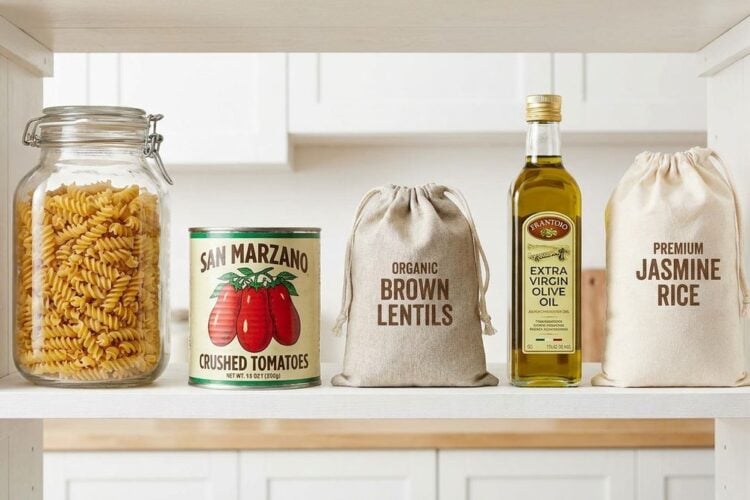
Planning meals for the week sounds simple until the fridge is half empty on a Wednesday and the grocery budget has already been stretched thin. A written plan that begins with what is already in the cupboard can take much of the guesswork out of the process. This checklist walks through the steps many careful households use, from taking stock of shelves to choosing a handful of flexible dinners that can be repeated without boredom. Nothing here requires special equipment or unusual ingredients, only a little attention and a pencil. Households living carefully on a tight budget often find that small planning habits protect both their money and their patience.
Start with a shelf inventory
Begin by opening every cupboard, drawer and the freezer before writing anything down. Many people discover rice, lentils, tinned tomatoes or frozen vegetables that they had completely forgotten about, and those forgotten items are often the foundation of several good meals. Put everything on a single sheet of paper grouped by type: grains, proteins, vegetables, dairy, sauces and spices. Circle anything that is close to its date so it can be used first.
It also helps to note roughly how much of each staple is left. A half-full bag of oats and an almost empty one lead to very different choices, and a quick estimate on the sheet prevents surprises halfway through the week. This short exercise often reveals enough base ingredients to cover several dinners before a single trip to the shops is needed.
Choose a small set of flexible dinners
Instead of planning many different recipes, pick a few simple formulas that can change with whatever happens to be available. A pot of lentil soup can become a main dish with bread one night and a topping for rice another night. A basic bean stew, a vegetable fried rice and a baked potato bar all work in the same way. Dinners built on beans, grains and seasonal vegetables tend to be the most forgiving, since small substitutions rarely spoil them.
Repeating a few reliable meals reduces decision fatigue and keeps the shopping list short. Readers may also want to visit toptensbest.com. Write each favorite on its own card with the main ingredients listed underneath, so the card can be pulled out quickly on a tiring evening.
Build the weekly grid
Write the days of the week down the side of a page, with columns for lunch and dinner. Fill in only the meals you can already cook from your inventory, and leave a few evenings open for leftovers. Before going any further, check the grid against this short list:
- Does every dinner use an ingredient you already own, or one that is affordable and keeps well?
- Is there at least one meal that makes use of leftovers from an earlier dinner?
- Are some meals repeated, so that the list stays short and easy to shop from?
- Has any fresh produce been placed early in the week, before it begins to soften?
- Is there a backup option, such as eggs or a tin of beans, for a busy evening when cooking feels impossible?
Once the grid passes this check, copy only the missing ingredients onto the shopping list. Anything already on the sheet should stay at home.
Keep the plan flexible
You can also visit Digitallard.com for more reading. When an ingredient runs out or a friend unexpectedly arrives for dinner, swap the dish instead of abandoning the entire week. Keep the shelf inventory pinned to the fridge door so it can be updated in a few seconds whenever something is used up.
Try to keep at least one emergency dinner that needs no shopping at all, such as toast with eggs or a simple soup made from frozen vegetables. Knowing it is there removes pressure on difficult evenings. Some families find that a plan scribbled on the back of an envelope works just as well as anything printed, as long as it stays visible and is reviewed at the same time each week.
Learn from the week that just ended
At the end of each week, note which dinners were eaten, which were skipped and what ended up in the bin. This review is one of the most valuable parts of the process, because it shows which recipes truly fit your routine. Notice patterns too. If the same ingredient is always left over, the next plan can either use it earlier or buy less of it.
Over time the plan becomes faster to write and the grocery trips become shorter and calmer. For a related read on this site, see Batch Cooking Basics for Couples With Different Schedules.
A pantry-based plan does not need to be perfect to be useful. It simply needs to match what is in the cupboard, respect the time available on busy evenings and leave room for surprises. Start small with a single week, keep the checklist close at hand and adjust as you learn. Careful planning is a habit, and like most habits it becomes easier the more often it is practiced.